 Skip to main content
~₽8.4B RUB
REVENUE
Resilience Profile
Mistral Alko
Russia's sole Abkhazian wine importer leveraged a ruble crisis to overtake every competitor — and now owns half the winery supplying it.
Moscow 🇷🇺
The world's largest country by territory with 144 million consumers and growing premium market segments, combining Soviet industrial legacy with revived appreciation for traditional craftsmanship, cultural authenticity, and domestic production.
Massive transcontinental market with sophisticated urban consumers and rich cultural heritage, where founder-led brands in specialty foods, natural beauty, and traditional crafts leverage regional diversity and premiumization trends.
Interactive map showing brand locations across the Global South. Use proximity search, view regional clusters, and explore nearby brands.
Map data © CARTO © OpenStreetMap contributors
Russia's sole Abkhazian wine importer leveraged a ruble crisis to overtake every competitor — and now owns half the winery supplying it.
A $5,000 soap formula became Russia's top organic brand. Then the founder died without a will—and the fairy tale outlived its storyteller.
When currency collapsed, most wine retailers contracted. Invisible grew 125% by buying what importers couldn't sell at any price.
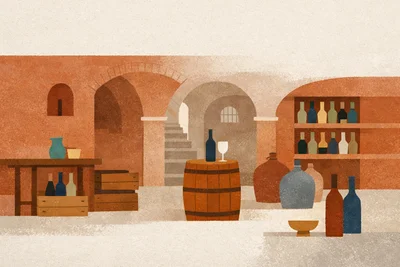
When 60% of Fort Wine's revenue channel vanished overnight in March 2020, the company matched peak holiday sales levels and grew exponentially.
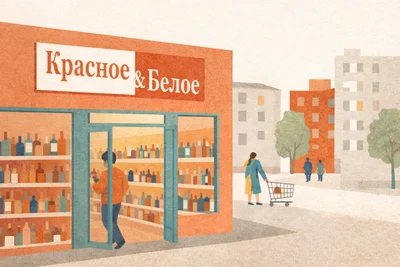
23% margins in an industry built on 150%. Russia's largest alcohol retailer proved volume beats premium by opening 20,527 stores.
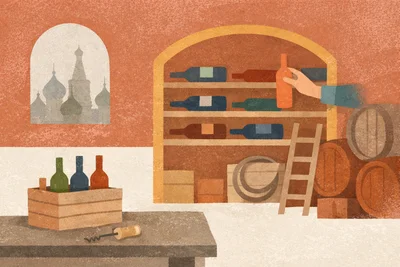
A €30,000 whisky bottle sits in SimpleWine's Moscow headquarters—debt payment from the 1998 crisis when currency was worthless.
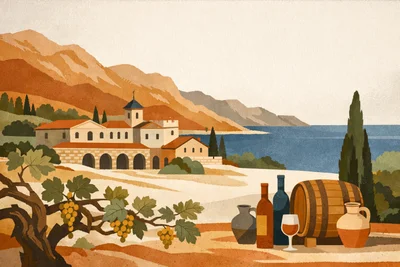
A Tsar sampled wine here in 1837. Sanctions mean you never will. Crimea's most exclusive winery produces 40,000 bottles for Russia alone.
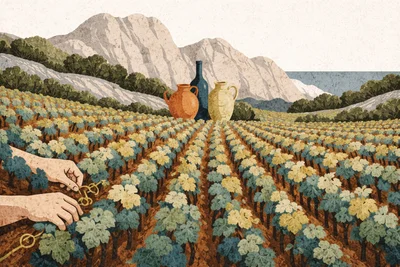
Russia's standard vineyard density is 3,000 vines per hectare. Château Sort planted 6,700—and turned skeptics into believers.
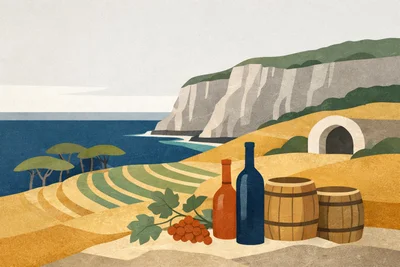
Seven gold medals at Mundus Vini in a single vintage. First Russian winery to achieve it. Now $80 bottles that win European competitions blind.
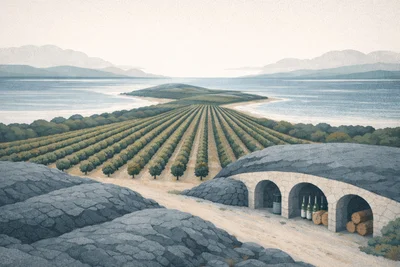
Nine years on volcanic blue clay to earn Russia's second wine appellation — a craft bet that valued irreplaceable geology at $20 million.
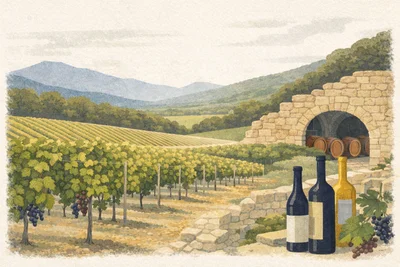
Purchased land for apple storage. Discovered 2,000-year-old fortress ruins and extinct French grape variety. Now Russia's #3 Sauvignon Blanc.
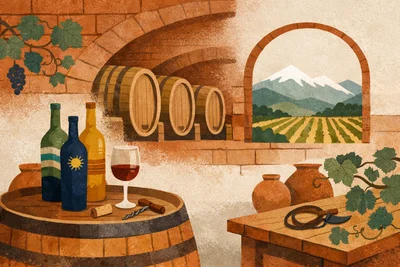
No distributor would touch Russia's first licensed family winery. Four years later, hand-painted bottles sell from Sochi to Vladivostok.
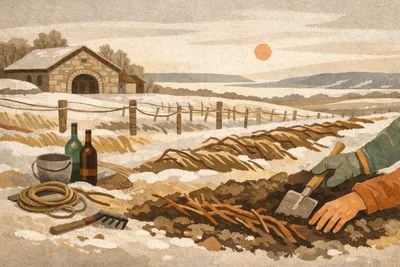
He made his fortune in potatoes. Then buried grapevines at 53°N where winter hits -47°C. The 2019 frost killed half his harvest. He kept going.
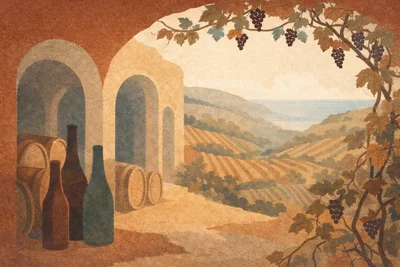
A frozen vineyard destroyed $2 million. The response: university at 43, indigenous grapes nobody wanted, and Russia's first Luca Maroni score.
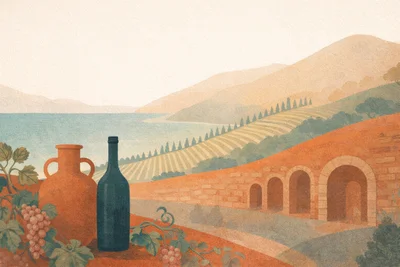
Bankrupt in 2014 with 75% of vineyards lost. Now produces 6 million bottles and anchors a three-winery empire across Krasnodar.
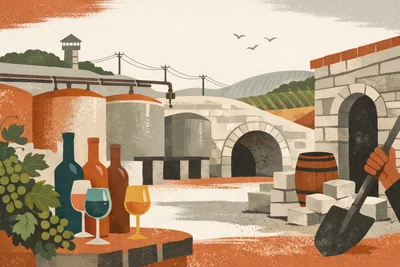
Bankrupted twice on the same debt. 2.7km of Stalin-era tunnels. 82,000 Soviet bottles. Now a grain billionaire's sparkling wine bet.
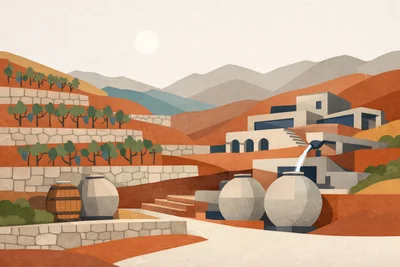
Two distributors walked away. Wine Spectator dismissed Russian wines. Then this construction CEO reached World's Best Vineyards #20.
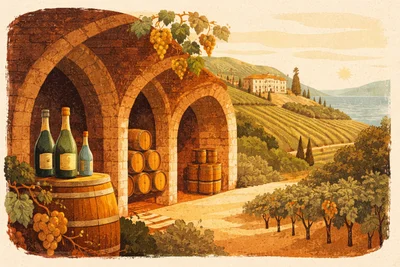
Every fifth bottle of Russian sparkling wine flows from cellars a Tsarist count built in 1860. The factory nearly died in 1993.
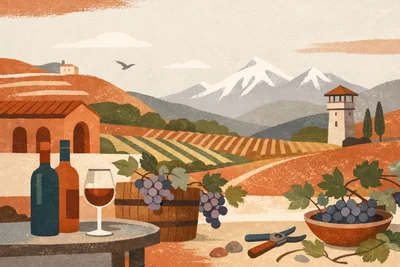
21 years of organic farming, no certification system. $18.7M in losses, forced sale. Then in 2022: first organic certification in Krasnodar.
Billionaire rescue capital, a highway 'lighthouse' winery, Russia's first World's Best Vineyards entry—from a project profitable only in 2024.
Helicopter search for one hectare found 200. Forbes billionaire agreed instantly. Four years of losses before Russia's Wine of the Year.
He produces only 100 bottles per wine from his basement. No retail, no prices—just free tastings that draw celebrities to Dagestan.
Four crises in twenty years. 150 restaurants built through counter-cyclical expansion. The empire that grows when competitors close.
Hebrew name. Israeli design. Chinese production. Russian stores. Boris Ostrobrod disguised "Russian" as "foreign" when domestic meant cheap.
Igor Samsonov died at 46. Eleven months later, Forbes crowned ESSE Winery of the Year. His quality systems outlived him—Crimea's boldest bet.
Russia's first sommelier champion planted biodynamic vines at 450m using methods no one had tried. Fourteen competitors followed.
When Italian nurseries refused Crimea shipments, these auto billionaires found Serbian suppliers—then planted Russia's densest vineyard anyway.
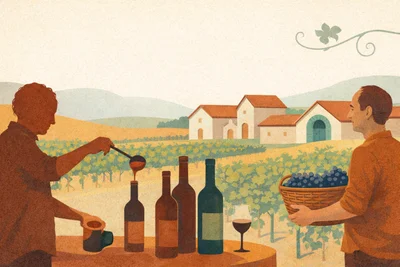
Russia's #31-ranked winery produces just 5,000 bottles annually—by two professionals who kept their day jobs and work weekends only.
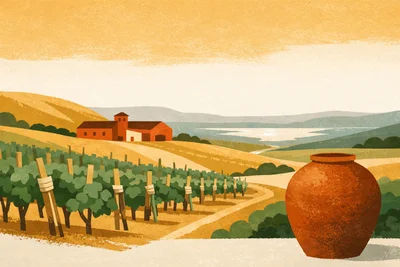
A grandfather bought land when his grandson Mark was born. Eleven years later, Marko became Stavropol's sixth licensed winery.
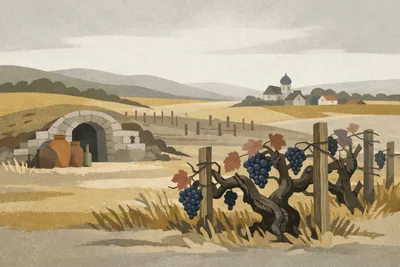
Soviet authorities destroyed 93% of Don Valley vineyards. One patriarch refused to cut a single vine, preserving 30+ extinct varieties.

Computing engineer → pharmaceutical magnate → vintner. 28 French trips before first vine. Three generations of botanical knowledge.
Russian Orthodox Church spent eight years preparing. Debut year: #12 nationally at 93.5 points. Two years in: Double Gold at Terravino.

Three years after annexation closed Western markets, a father-son team built a Forbes-recognized winery on sanctioned Crimean soil.
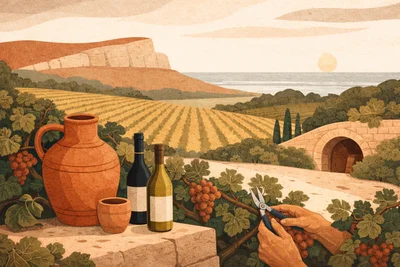
Eight years from borrowed licenses to Grand Prix champion. A self-taught ceramics maker built one of Russia's ten Laureate wineries.
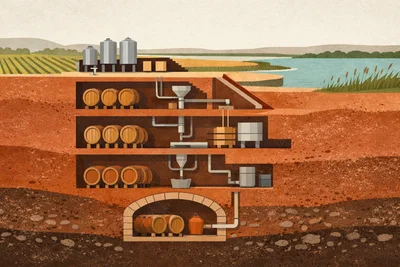
Loans at 24%. Twelve years unprofitable. Friends watching her 'descend into a pit.' Then Certificate №001—Russia's first federal license.
From Ufa to Paris Fashion Week. Zero ad budget, Instagram-first. 150 stockists at peak—yet founder admits "all the same doubts—they are endless."
$110 million and Château Mouton Rothschild's winemaker built Russia's first 91-point Parker wine. Bankruptcy. New owners inherit.
EU sanctions closed exports in 2014. Alma Valley built Russia's only gravity-flow winery, won IWSC medals, rode import substitution.
750,000 rubles per bottle—a Russian wine record. Krasnostop Zolotovsky grapes are DNA-verified to exist nowhere else on Earth.
Russia's champagne birthplace. Prince Golitsyn carved cellars into coastal cliffs in 1878—tunnels that supplied tsars and outlasted regimes.
A 300-year winemaking tradition nearly died in 2018—not from market failure, but one death without succession. 720M RUB debt.
Gorbachev closed 600 liquor facilities—Derbent preserved its vineyards. 1998 devastated the industry—Derbent survived. 163 years.
The harbor where the Light Brigade charged in 1854 now produces 10 million bottles of sparkling wine annually from 135 years of heritage.
Europe's largest underground cellars—55,000 sqm carved into Roman quarries where natural limestone maintains 14-18°C year-round.
In 1917, workers bricked up seven tunnels to hide the tsar's wines. The million-bottle collection survived five regime changes.
Imperial decree, Soviet survival, Western sanctions. In 152 years, Abrau-Durso has outlasted every force that tried to end it.
Soviet bulk winery hired an Australian consultant in 2004. Today: 36.6 million bottles, Parker 97, 800K bottles to China yearly.
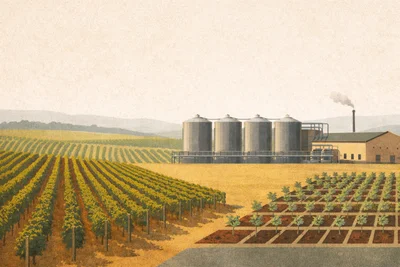
Two engineers spent $100M building Russia's largest winery—100% own grapes, 95.5M bottles. Then the state took it in 37 days.
Sold at market peak for $50M. Bought back for $15M when the bank's president fled abroad. Now 400+ stores built from 1936 Soviet roots.
A converted dairy factory. Russia's first still Pinot Meunier. Forbes Top100 at 93 points. All while Western sanctions closed export markets.
Russia's most prestigious wine portfolio—Romanée-Conti, Pétrus, Gaja—belongs to two engineering students who started by selling dishes.
Two brothers built Russia's oldest wine chain to 1,014 stores in complete anonymity—then a 2025 lawsuit split the ₽50 billion empire.
A minister's wife, $20M in state loans, and Black Sea terroir at Bordeaux's latitude. Result: TerraVino 2022's 'Best Wine of Russia.'
Kremlin toast in 2012. Bankrupt by 2018. Michel Rolland consulting by 2021. Russia's first French-style winery refuses to die.

Four generations: Soviet workers → Fanagoria Chief Winemaker (35 years) → Russia's first family farm license → both sons involved.

Russia's sole Abkhazian wine importer became its largest overnight — not through strategy, but through a currency crisis no one saw coming.

Conventional platforms return zero results on a 12-location restaurant group, a ₽8.6 billion winery, and Russia's largest hospitality empire. The data exists. The synthesis does not.

The founders who built private enterprise across four emerging markets are aging out simultaneously. Most investors will miss it entirely.

He built Russia's organic cosmetics empire on mythology — then died without a will. The succession war that followed nearly destroyed everything.

A bottle sold for 750,000 rubles at auction. The grape: Krasnostop Zolotovsky. Russia's wine revolution — invisible, undeniable.

What if the best succession means leaving the family business? The Uzunovs discovered how knowledge can transfer without institutions.

A boutique winemaker bought a Soviet giant producing 60 times his volume. What made it work was knowing exactly what not to merge.

Only 3% of family businesses survive to the fifth generation. The Khimichevs beat those odds—by inheriting mission, not money.

Banks refused, 15 years at risk. Abramovich's circle acquired 70%—exiting four years later with Russia's first World's Best Vineyards entry.

$463M insurance exit. $110M wine bet. First Russian 91-point Parker wine. Then the Nikolaevs walked away—mission accomplished.

Vadim Lapin demanded his son be a partner, not heir. Mark won "Best Restaurant" independently. Three days after Vadim's death, the test begins.

67-day knowledge transfer. 'Winery of the Year' 12 months later. How Samsonov defied the 60-70% failure rate of founder transitions.

Ruble collapsed 70%. Competitors raised prices 200%. Ostrobrod froze them—destroyed margins built 30 years of customer loyalty.

Ivan the Terrible killed 110,000 in 1552. Five centuries later, the Qolsharif Mosque rises again. Identity survives total defeat.

When crises hit, Global South brands don't scramble for suppliers—they own them. Infrastructure ownership becomes unreplicable moat.

Sanctions closed Europe overnight. Fanagoria tripled China exports in 90 days—800,000 bottles redirected in three months proves agility wins.

$110M bet on overlooked Russian terroir everyone ignored. Fifteen years later, Lefkadia ranked World's Best Vineyards Top 30—ahead of Tuscany.

Boris Titov rescued a 136-year imperial estate. His son inherited it, then sanctions arrived—and the real succession test began.

Valery preserved dying Don Valley grapes for 23 years. When his son Maxim took over, the resulting wine sold for 750,000 rubles.

From provincial Ufa to Paris Fashion Week. No connections, no proximity, no fashion pedigree. Geographic disadvantage became creative edge.
Type to search across all brands and founders